
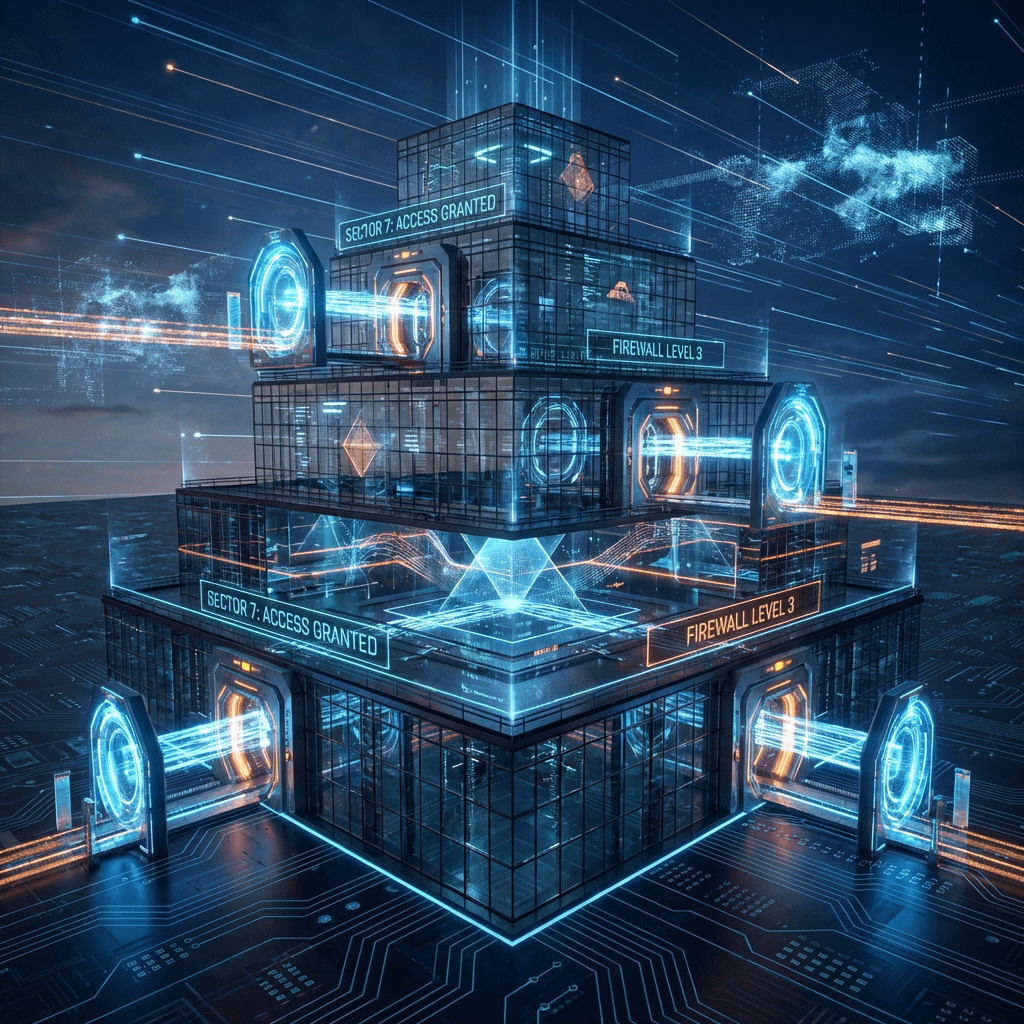
I Think. Therefore, IAM — Part 3 of a series on Identity, Access, and the Architecture of Trust.
The Complaint Against Friction
Every security control that asks something of a user is met with the same complaint: it is security friction. The extra prompt, the second factor, the approval step, the re-authentication — all are treated as obstacles between a person and what they want to do. The implicit goal of much of modern UX is to remove friction entirely, to make access frictionless.
But frictionless access is also thoughtless access. When every action flows without resistance, the actor never pauses to consider what they are doing or whether they should. Friction, applied deliberately, is not a failure of design. It is an invitation to attention.
The cost of frictionless design is easy to overlook because it is paid silently. A single click that moves money, a one-tap confirmation that wipes a record, an auto-approved request that escalates privilege — each is a convenience until the moment it is a catastrophe. Frictionless systems do not only speed up legitimate work; they also remove every speed bump in front of mistakes and attackers alike. Automation, phishing, and accidental clicks all travel faster on a road with no resistance. Some of the most damaging incidents in security are not failures of strength but failures of pause.
The Pause Before the Privileged Act
Consider the step-up authentication that appears only when an action carries real consequence: deleting a production database, approving a large transfer, granting administrative rights. The momentary pause it imposes does two things. It verifies that the actor is who they claim to be, and — just as importantly — it makes the actor aware that they are about to do something that matters.
This is security friction as a feature, not a bug. It is the system asking, gently: are you sure? Not because it doubts you, but because the gravity of the act deserves a moment of conscious presence.
This is why the craft lies in placement rather than quantity. Friction scattered indiscriminately trains people to click through it without reading, the way nobody truly reads a cookie banner. Security friction that demands attention for trivial actions does not create mindfulness; it creates fatigue, and fatigue is its own vulnerability. The discipline is to spend a user’s limited attention where it counts — to stay invisible during the hundred routine actions of a day and to surface, deliberately and unmistakably, before the one that cannot be undone.
The Philosophical Parallel
In contemplative traditions, mindfulness is the practice of inserting a deliberate gap between stimulus and response — a space in which intention can form before action follows. The bell that marks the beginning of meditation, the breath taken before speaking: these are friction, chosen on purpose, to make the automatic deliberate.
Well-designed security friction is systemic mindfulness. It is the architecture remembering, on the actor’s behalf, to be present at exactly the moments that warrant presence.
Seen this way, friction is attention externalized. A person cannot hold every consequence in mind at every moment; the system can hold it for them and return it precisely when it is needed. The well-placed prompt is not an obstacle but a reminder — a small ritual that restores awareness to an action that habit would otherwise carry out half-asleep. The mindful system does not nag. It waits quietly, and speaks only when speaking matters.
Closing Thought
The goal is not to maximize friction or to eliminate it, but to place it precisely — absent where action is routine, present where action is grave. Friction, rightly used, is how a system teaches its users to pay attention.
Previous: ← Part 2 — The Architecture of Impermanence | Next: Part 4 — The Ultimate Orchestrator →